Choosing the right lighting is essential for plant growth, fish health, and the overall appearance of your freshwater aquarium. The following selections emphasize full-spectrum options, adjustable brightness, timers, and easy installation. Each product is selected for reliability, user-friendly features, and compatibility with 18–24 inch tanks. The guide below helps you compare performance, installation requirements, and day-night modes to support healthier aquatic life and vivid colors.
| Product | Brand | Key Features |
|---|---|---|
| AQUANEAT LED Aquarium Light Full Spectrum | AQUANEAT | Full spectrum, 42 LEDs, 18.5″ length, brackets for 18–24″ tanks, adjustable white/blue/pink/green mix |
| hygger Clip On 24/7 Lighting | hygger | 24/7 cycling modes, sunrise-sunset-moonlight, timer and brightness control, adjustable thickness, clip-on |
| SEAOURA Led Aquarium Light | SEAOURA | Full spectrum, DIY mode, adjustable brightness, extendable brackets, 89% CRI |
| hygger 14W Full Spectrum | hygger | Extendable brackets, three color modes, 14W, 18–24″ suitability, durable shell |
| NICREW C10 24/7 LED Aquarium Light | NICREW | Full spectrum, timer, four preset modes, adjustable spectrum per channel |
AQUANEAT LED Full Spectrum Light (18″–24″ Tanks)
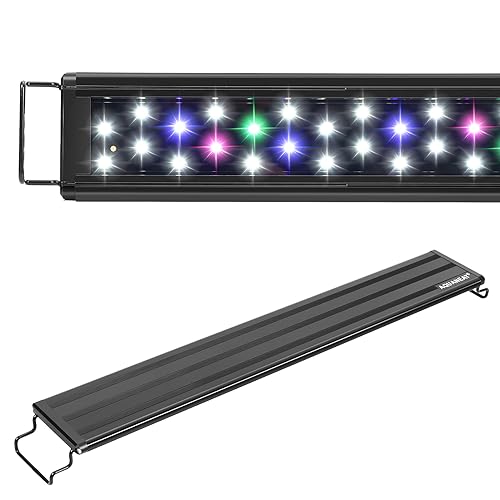
The AQUANEAT LED Full Spectrum fixture is designed to fit long tanks from 18 to 24 inches with extendable brackets. It uses a total of 42 LEDs, including 30 white 6500K, 6 blue, 3 pink, and 3 green LEDs to create a balanced spectrum for both fish viewing and plant growth. When mounted, the light body measures roughly 17″ without brackets or about 18.5″ with docking brackets. It supports various rim sizes and is suitable for a wide range of freshwater setups. The configuration aims to reproduce natural daylight while highlighting plant colors for a vibrant aquarium display.
hygger Clip On 24/7 Lighting Aquarium LED Light
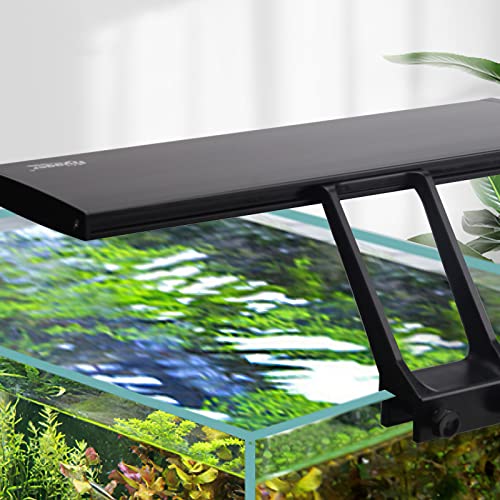
This hygger model offers 24/7 lighting with a sunrise-daylight-moonlight cycle and a DIY mode. It includes a timer with options for 6, 10, or 12 hours and five brightness levels. The new clip-style bracket supports tanks with glass under 0.9 inches thick and can be mounted on different tank configurations. The unit uses a detachable adapter to reduce waste if damaged, and its thicker aluminum casing helps dissipate heat efficiently. It’s a flexible choice for planted tanks or livestock that benefit from a consistent circadian rhythm.
SEAOURA Full Spectrum LED Aquarium Light

The SEAOURA LED fixture emphasizes a full-spectrum output with adjustable brightness via a simple controller, making it suitable for beginners and advanced hobbyists alike. It features a DIY mode for custom time, color, and brightness settings and includes adjustable brackets to fit 18–24 inch tanks. Its five-primary color options, including white, blue, red, green, and pink, help to tailor lighting for different plant species and fish. The design prioritizes user-friendliness and reliable daily operation for planted tanks.
hygger 14W Full Spectrum Aquarium Light
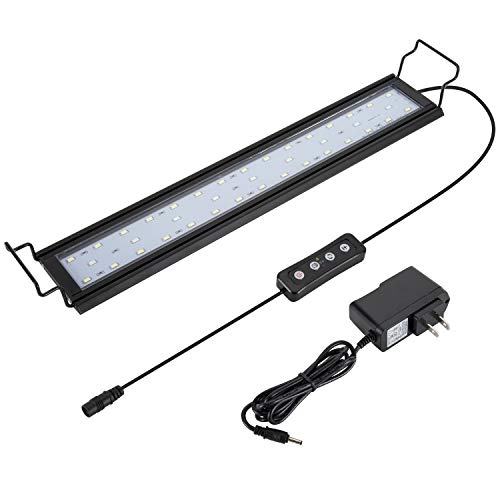
This 14W hygger model is tailored for 18–24 inch tanks with extendable brackets. It provides a three-mode spectrum (white, blue-white-red, and red-blue) and is designed for easy color shifts to match daytime, sunset, or moonlight moods. Users can adjust the color balance via the controller to suit plant growth or aesthetic goals. The light is compact, durable, and suitable for freshwater tanks with light to moderate plant coverage, offering a straightforward option for simple setups that demand reliable performance.
NICREW C10 24/7 LED Aquarium Light

The NICREW C10 provides a full spectrum with 6500K white LEDs and tri-colored RGB LEDs aimed at promoting plant growth and color vibrancy. It includes four preset modes and a fully adjustable spectrum, allowing the user to dial in brightness and color balance by channel. The 90 CRI helps colors appear vivid under water, which is especially beneficial for observing fish and plant life. This model is a solid option for hobbyists who want detailed control over spectral output without complex setup.
Buying Guide: Key Purchase Considerations
- Tank compatibility and mounting: Ensure the light length matches your 18–24 inch tank and check whether brackets are extendable or if the unit can clip onto the rim without risk of slipping.
- Full-spectrum output: Look for a spectrum that includes white for day-to-day visibility and blue or red components to support plant photosynthesis and fish coloration. A higher CRI (color rendering index) will render true colors more accurately.
- Adjustability and timers: Devices with multiple brightness levels, color options, and programmable timers help simulate natural day-night cycles, reducing stress on inhabitants and promoting plant growth.
- Durability and heat management: Aluminum housings and robust connectors improve longevity. Heat dissipation is important for longer life and stable light output, particularly for high-CRI LEDs.
- Ease of installation: Clip-on designs are convenient for rimmed tanks, while extendable brackets require precise measurement. A detachable power adapter can lower waste if replacement becomes necessary.
- Water and placement options: Submersible models offer flexible placement options but require IP-rated waterproofing. Check if the light is designed for submersion or external mounting behind the tank.
- Plant compatibility: For planted tanks, prioritize lights with dedicated spectrum for photosynthesis (red and blue bands) and modes that support gradual sunrise and sunset transitions.
- Maintenance and replacement parts: Consider availability of replacement LEDs or controllers, and whether the system uses a single-block controller or separate channel controls for brightness and color.
When selecting a light, align the product features with your aquarium’s needs: plant growth requirements, fish behavior, and the desired visual effect. For low-to-mid light aquatic plants, lights with 5000–6500K white plus blue and green accents are typically sufficient, while more demanding plants may benefit from brighter, adjustable full-spectrum options. Regular checks for LED degradation and ensuring the fixture remains securely positioned will help preserve the health and spectacle of your freshwater ecosystem.