Keeping large canine friends active is essential for health, happiness, and behavior. This guide highlights the best dog treadmills designed for large dogs, emphasizing non-electric and adjustable options that cater to powerful jogs, tall heights, and durable frames. Each pick below offers a mix of safety features, ease of use, and robust construction to help dogs burn energy indoors when outdoor walks aren’t ideal.
Overview of selected products: the list focuses on non-electric or semi-assisted treadmills with sturdy frames, wide belts, and adjustable braking or resistance to suit big breeds like Malamutes, German Shepherds, and Pit Bulls. These machines prioritize paw-friendly materials, quiet operation, and easy maneuverability for pet owners. The table below summarizes key product highlights to assist quick comparison.
| Product | Brand | Max Weight | Type | Notable Feature |
|---|---|---|---|---|
| VEVOR Dog Treadmill for Large/Medium Dogs | VEVOR | 330 lbs | Non-electric, manual drive | Three adjustable ramps and secure braking |
| Moysoon Dog Treadmill for Large/Medium Dogs | Moysoon | 300 lbs | Non-electric, self-driven | Adjustable speed via dog drive, braking safety |
| TOYMOMMY Dog Treadmill with Disc Brake | TOYMOMMY | 300 lbs | Non-electric with disc brake | PE tread belt, low noise, resistance adjustment |
| Albott Dog Treadmill for Large & Medium Dogs | Albott | 330 lbs | Non-motor, pace-adjustable brake | Hands-on control and safe indoor use |
| PawPaw’s Dog Treadmill for Large Dogs | PawPaw’s | Up to 60 kg/132 lbs listed in some variants | Non-electric with brake | Indoor/outdoor adaptable with treat-guided use |
VEVOR Dog Treadmill For Large Dogs

The VEVOR dog treadmill is designed for large and medium dogs with a robust, carbon steel frame and a wooden track that’s gentle on paws. This non-electric unit allows the dog to drive the belt through natural movement, promoting fat burning, muscle development, and mental stimulation. The 68.9 x 20.08 x 5.12 inch footprint accommodates large breeds, with a wide 15.55 inch belt to support longer strides. Two wheels enable easy repositioning, while aluminum rollers add safety during high-intensity sessions. The included three adjustable ramps help tailor incline and challenge for different fitness levels.
Key considerations include its non-powered operation, reducing the risk of overexertion, and the guidance needed during initial sessions—treats can smooth first experiences. The product supports dogs up to 220 pounds and reaches a height tolerance suitable for tall breeds, making it a versatile indoor workout option when outdoor exercise isn’t feasible.
Moysoon Dog Treadmill For Large/Medium Dogs

The Moysoon treadmill emphasizes indoor weatherproof exercise with a focus on self-driven operation. The non-electric design means the dog determines the pace, guided by smooth, low-noise rollers that create a safe environment for training. A handbrake-style assist offers instant speed control, enhancing safety during sessions and enabling a quick stop if needed. The belt is designed to support robust activity without the complexity of motorized systems, which can simplify maintenance for households with large dogs.
For owners, the treadmill supports dogs up to 300 pounds, though performance will depend on breed, age, and training level. The product highlights comfort and safety, with protective measures and stable construction that accommodate long, vigorous workouts as well as gentle warm-ups. The setup aims to deliver reliable indoor exercise during inclement weather or busy schedules.
TOYMOMMY Dog Treadmill With Disc Brake

The TOYMOMMY model combines a docking-style disc brake with a handbrake for robust control of pace and safety. It uses a PE tread belt—durable, lightweight, and easy to clean—delivering quieter operation and a pet-friendly surface. The treadmill emphasizes resistance adjustment, enabling owners to tailor workout intensity to a dog’s fitness level and training goals. This approach supports gradual progression and helps maintain consistent exercise without motorized speed constraints.
With a maximum weight rating around 300 pounds, this unit suits large dogs well. Its non-electric design reduces maintenance demands while preserving the user’s ability to guide the pet during movement. The belt materials balance durability and noise reduction, contributing to a calm indoor exercise experience.
Albott Dog Treadmill For Large & Medium Dogs

The Albott treadmill focuses on pace-adjustable braking and a sturdy indoor setup. It’s designed for large and medium dogs with a generous weight capacity. The device operates without motors, enabling dogs to determine speed by their own movement. A pace-adjustable hand brake gives owners precise control during workouts, allowing gradual intensity increases. This model is suitable for dogs with varying energy levels, including those needing a steady, safe exercise routine in confined spaces.
Key strengths include a simple mechanical design, a robust frame, and a reliable belt system. The indoor-use orientation helps maintain consistent exercise regardless of weather, making it an appealing option for daily routines or recovery periods after illness or surgery. Its emphasis on safety features helps prevent abrupt accelerations and supports long-term training consistency for large breeds.
PawPaw’s Dog Treadmill For Large Dogs
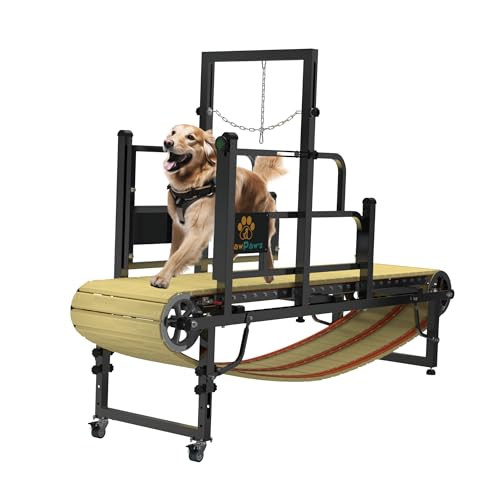
PawPaw’s treadmill presents a non-electric option with a brake system to keep dogs safe during workouts. It supports large and medium dogs by offering a sturdy, non-motorized running surface that owners can guide with treats and careful observation. The device is suitable for indoor use and can be adapted for outdoor applications, allowing dogs to expend energy in a controlled environment. Features emphasize ease of interaction, making it a practical choice for households needing flexible exercise tools.
Overall, PawPaw’s focuses on safety and accessibility, pairing a simple braking mechanism with a durable track and frame. It’s well-suited for dogs that benefit from guided, low-stress movement, and it provides a reliable way to maintain activity levels on days when outdoor activities aren’t ideal.
Buying Guide: Key Considerations For Large Dogs
- Non-electric vs. electric: Non-electric or self-driven treadmills empower dogs to set their pace, reducing mechanical failure risk and often lowering noise. Electric treadmills may offer adjustable speed and incline but require more space and maintenance.
- Weight capacity: Choose a model rated for at least 1.5 times your dog’s weight as a safety buffer. Large breeds vary greatly, so verify the maximum supported weight and shoe/foot clearance of the belt.
- Belt and surface: Look for a wide, paw-friendly belt made from durable materials. A belt that’s too rigid can harm paws; a slightly cushioned surface promotes long sessions without fatigue.
- Brake and safety: Brakes, hand brakes, or disc brakes are essential for quick stops. Ensure there are transparent panels or clear indicators so owners can monitor exercise status safely.
- Ease of use and maintenance: Consider assembly requirements, portability (wheels and weight), and belt cleaning. Non-motorized belts are typically easier to maintain.
- Indoor suitability: Large dogs often benefit from treadmills designed for indoor use in homes with limited outdoor access. Noise level and track stability are critical for keeping dogs calm.
- Training needs: Some dogs respond better to guided movement with treats, while others prefer self-driven pacing. Choose a model that aligns with your dog’s temperament and training plan.
- Warranty and support: Durable frames and high-quality belts deserve solid warranties. Check return policies and customer support responsiveness in case adjustments are needed.
When selecting a treadmill for a large dog, balance safety, control, and comfort. Non-electric models provide natural pacing and fewer maintenance concerns, while semi-assisted designs can offer more control during training. Proper fitting, gradual introduction, and ongoing supervision are essential no matter which option you choose.